Career Changer Guide
I need to get up to speed on a new industry fast, without a year of domain experience.
You're moving into a new industry and have two weeks to become fluent enough to interview confidently. You need to understand the strategic forces, key challenges, and vocabulary — fast.
Working example
Electric Power Generation, Transmission and Distribution ISIC 3510
You've spent 8 years in automotive manufacturing. You're interviewing for a strategic planning role at a renewable energy company in two weeks. You need to speak the language of that industry from day one.
Journey 1
Get fluent in your target industry before the interview
Build enough strategic knowledge of the electricity sector to speak confidently about competitive forces, key risks, and the policy environment in an interview setting.
Industry Browse
Find your target industry
Browse the industry directory and search for your target sector.
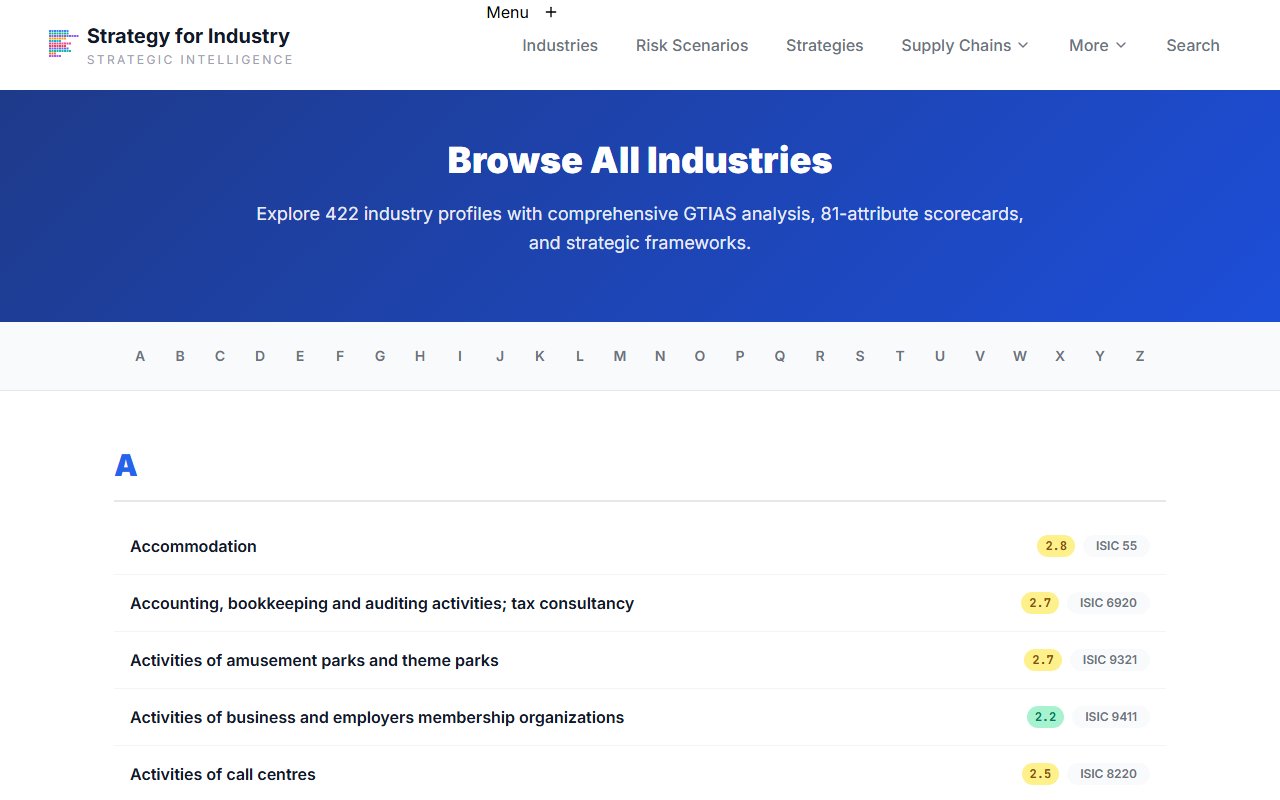
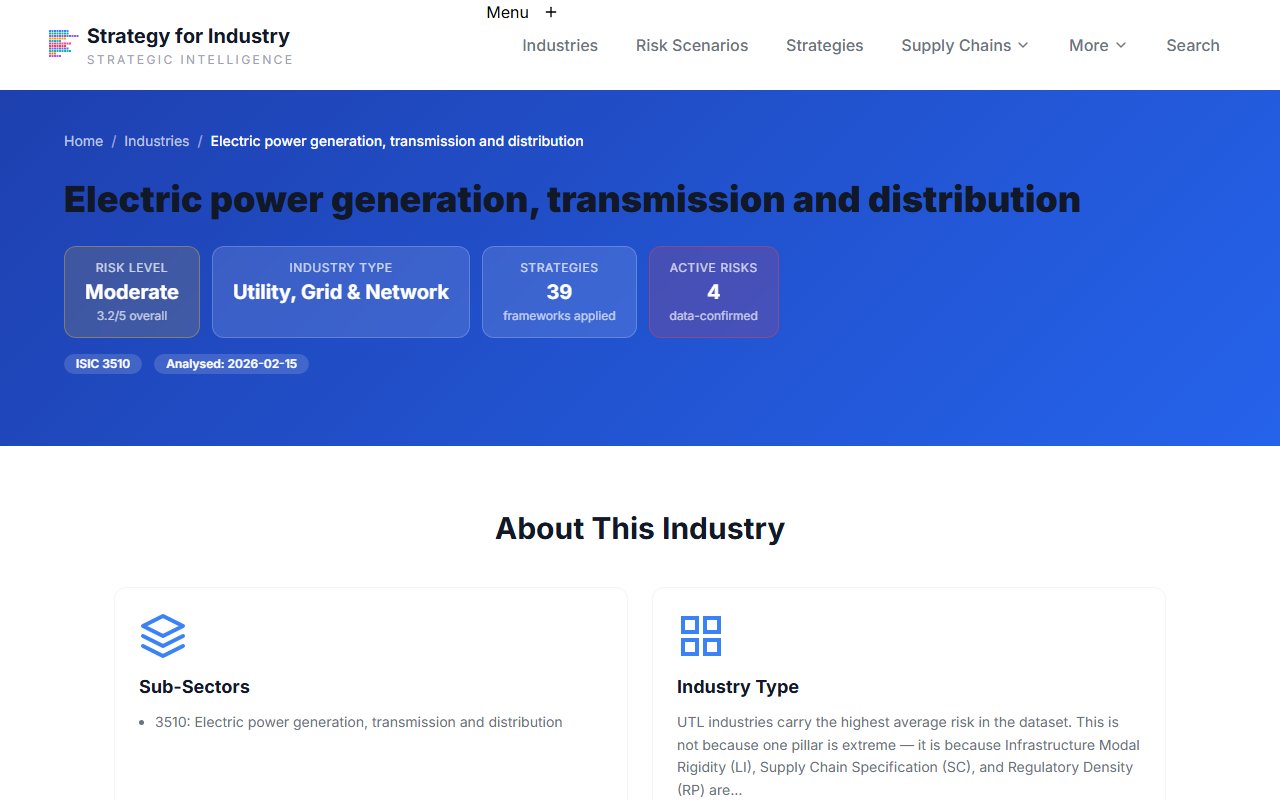
Search for 'electric power' or 'electricity generation' — ISIC 3510 covers the whole value chain from generation through distribution. This is the industry most renewable energy companies operate in.
Industry Hub
Read the executive summary
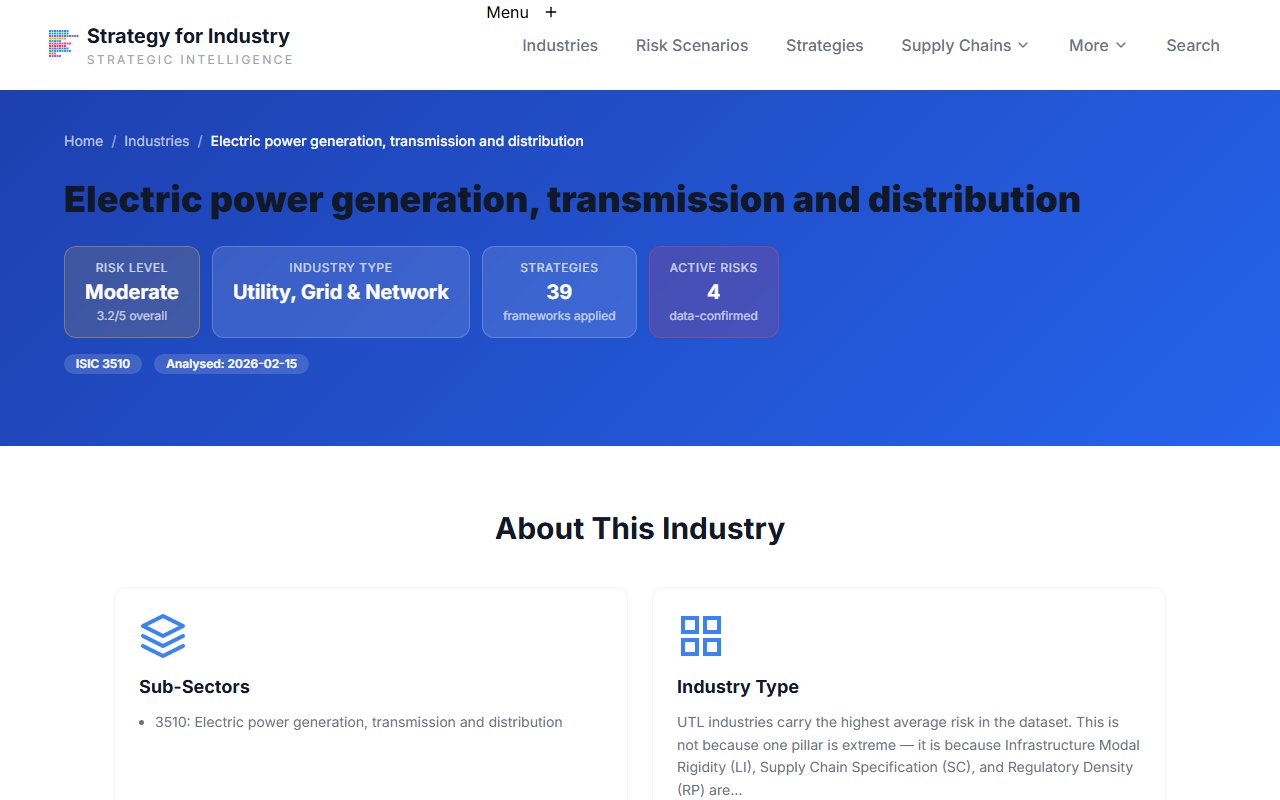
Open the industry hub page and read the executive summary fully.
Read it twice — first for an overview, second to note the specific terms and concepts you don't recognise. These become your self-study list. The language used here is the language your interviewers will use.
Porter's 5 Forces
Read the Porter's 5 Forces analysis
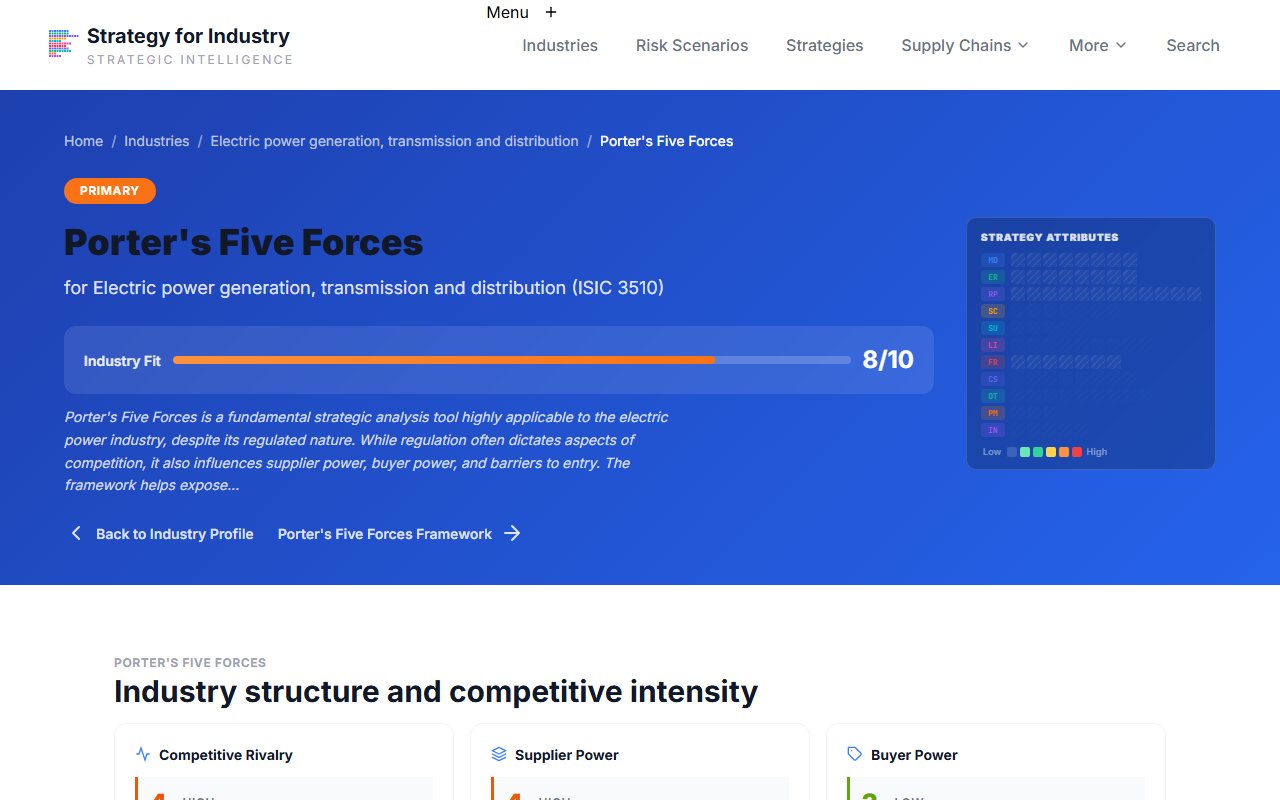
Open the Porter's 5 Forces strategy page for this industry.
This is the framework interviewers are most likely to use. The analysis covers regulatory barriers to new entry, power of large utility buyers, threat from distributed generation (solar, wind), and rivalry between incumbents. Know the scores and the 'why' behind them.
PESTEL Analysis
Read the PESTEL analysis
Open the PESTEL framework page — this covers the policy and macro environment.
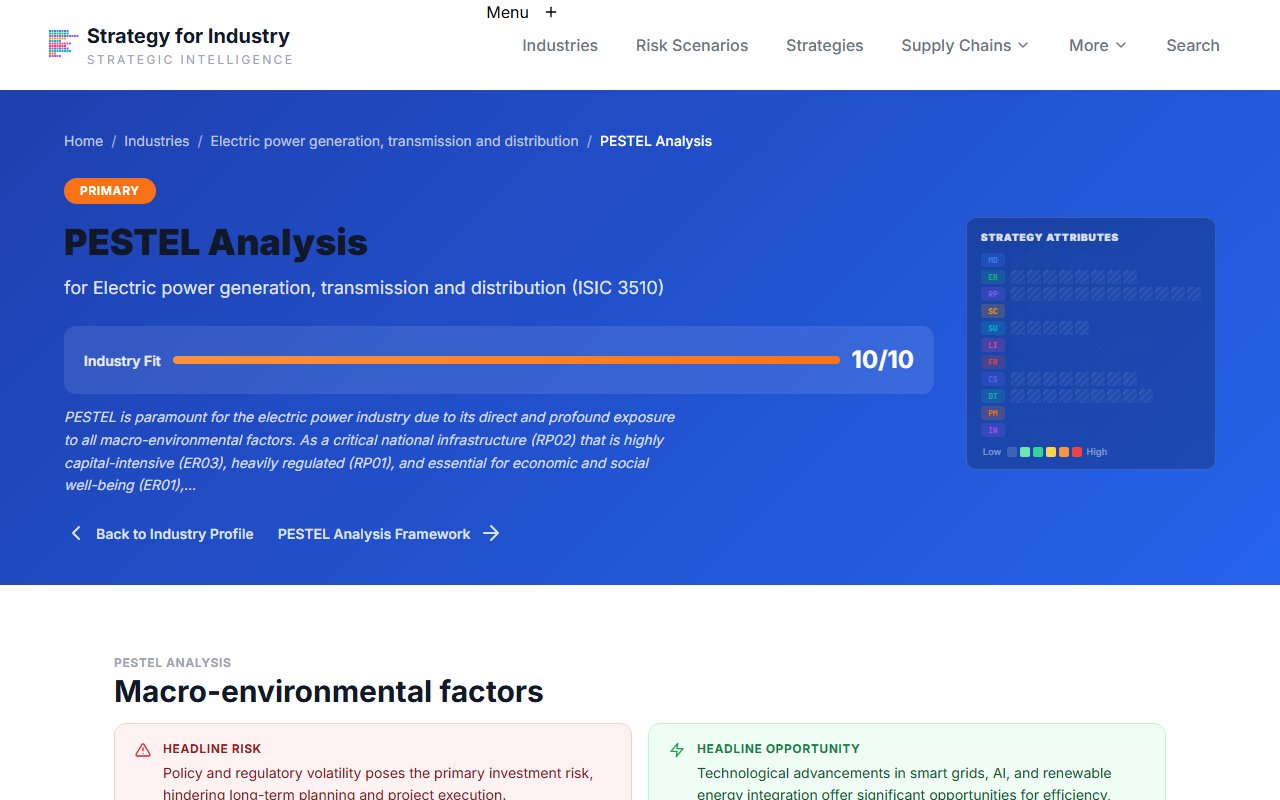
In energy, the Political and Environmental factors dominate. The PESTEL will explain energy policy, carbon pricing, renewable mandates, and infrastructure investment — the topics most likely to come up in a strategic planning interview.
Industry Hub — Risk Scenarios
Review confirmed active risks
Return to the industry hub and scroll to 'Confirmed Active Risks'.
When an interviewer asks 'what do you see as the main challenges facing this industry right now?' — the confirmed active risks are your answer. They're specific, current, and backed by a scoring framework.
After this journey
You can walk into the interview with: a Porter's 5 Forces summary you can articulate, a PESTEL overview covering key policy forces, and 2–3 current risk conditions you can discuss by name — all framed in the language of this specific industry.
Journey 2
Map your transferable skills between your old and new industry
Use a side-by-side attribute comparison to identify where your automotive experience gives you an advantage — and where the gaps are in the new sector.
Compare Tool
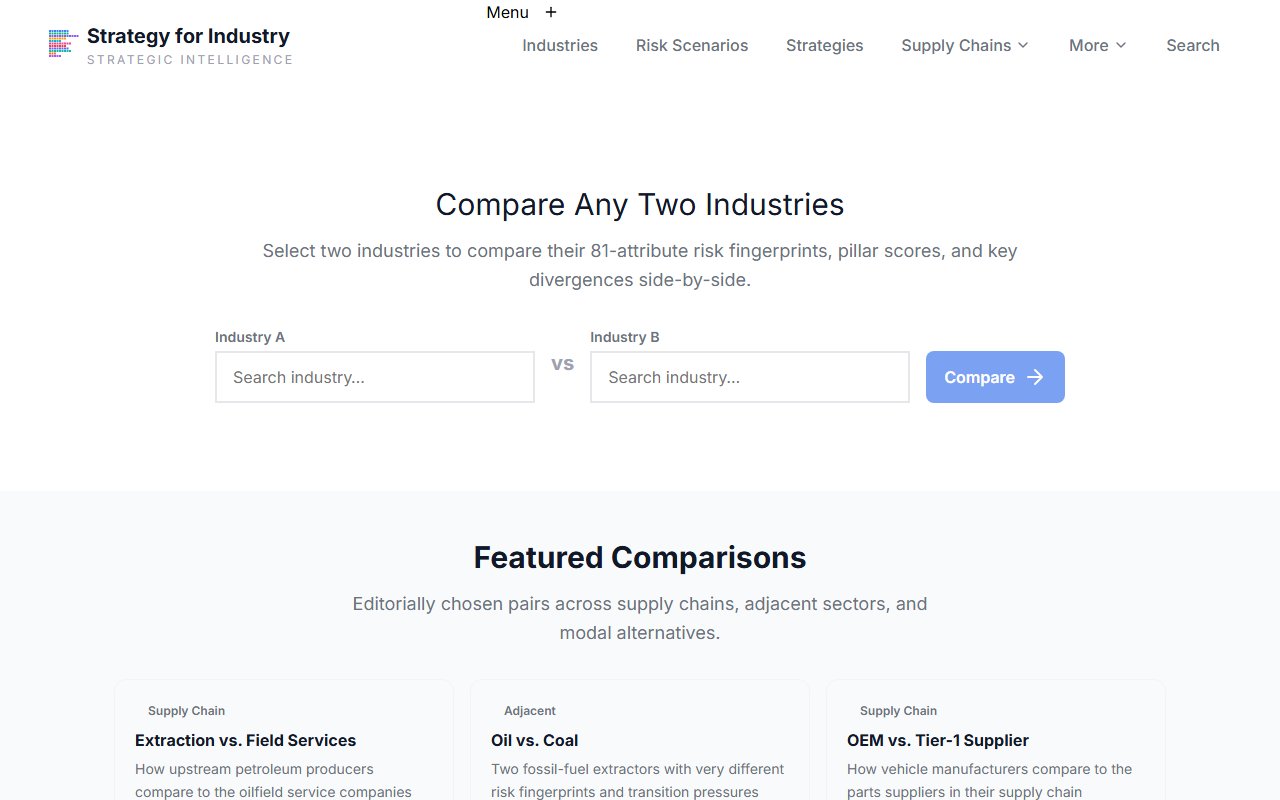
Open the Compare tool
Go to the Compare tool and set up Motor Vehicle Manufacturing vs. Electric Power Generation.
Select 'Manufacture of Motor Vehicles' (ISIC 2910) as Industry A and 'Electric Power Generation, Transmission and Distribution' (ISIC 3510) as Industry B. This shows the structural difference between where you've been and where you're going.
Compare Results — Strengths
Find your strength areas
Review the comparison and identify attributes where automotive scores higher.
Focus on Supply Chain (SC) and Process Management (PM) attributes. Automotive typically scores high on supply chain complexity and process maturity — these are directly transferable skills. Note the specific attribute codes and read what they mean.
Compare Results — Gaps
Identify the learning gaps
Look at attributes where the electricity industry scores significantly higher than automotive.
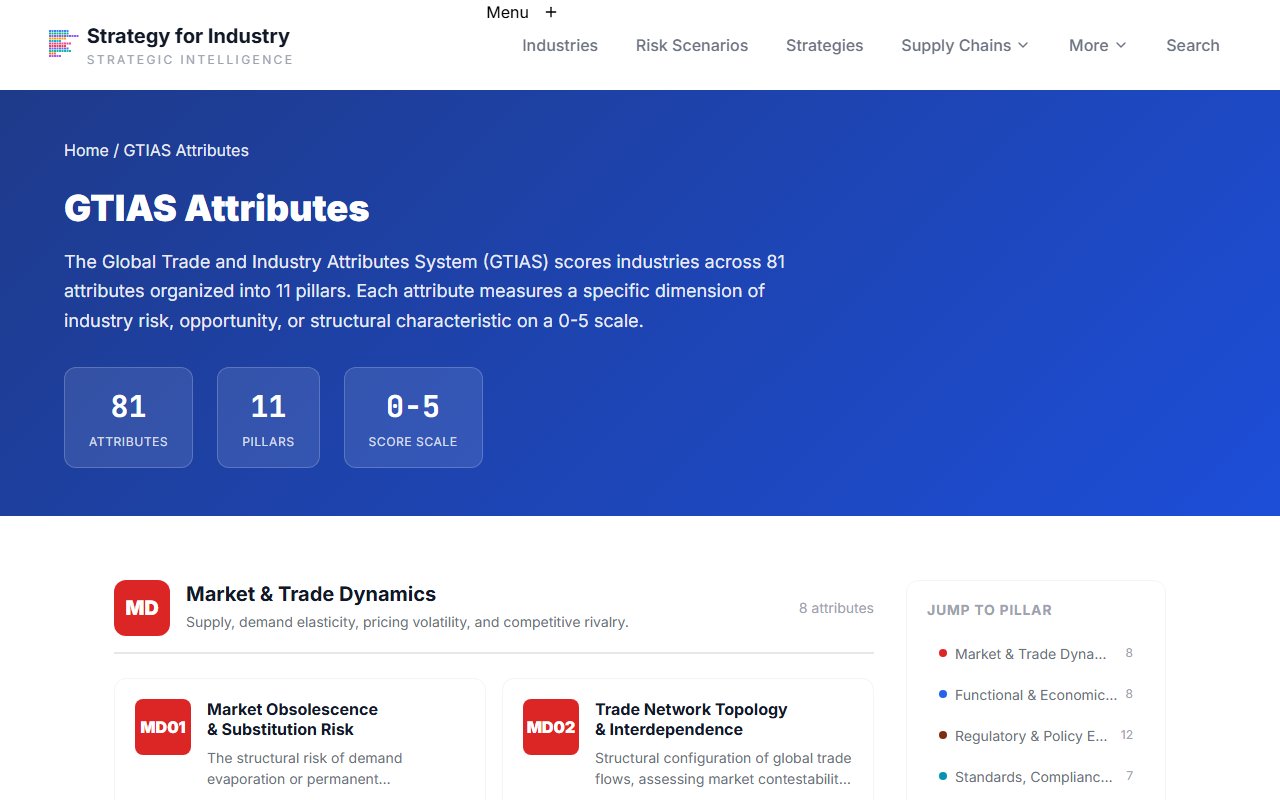
In energy, Regulatory Pressure (RP) and Sustainability (SU) attributes are typically higher than in automotive. These are your learning gaps — visit /attributes/ to understand exactly what these scores mean and how to close them.
Attributes Index
Read the attribute definitions for your gaps
Open the Attributes page and look up the specific attribute codes from your gap list.
Each attribute page explains what each score level means in practice. Understanding RP02 (Regulatory Burden) at level 4 in the energy sector tells you specifically what regulatory demands the industry faces — and what you need to study before your interview.
After this journey
You have a personal transfer map: attributes where your automotive experience is a direct advantage (use these in your cover letter and interview answers), and a short gap list with specific definitions of what to learn before the interview.
Journey 3 — Explore next
Understand the risk landscape your interviewers live in
Open the matched risk scenarios for the electric power generation industry to see which active risk conditions are keeping industry leaders up at night. Understanding 2–3 confirmed risks in depth — their triggers, business impact, and mitigation responses — gives you ready-made depth for questions like 'What do you see as the biggest challenges facing this sector?'
View electric power industry risksReady to explore?
Start with the working example for this guide — or search for any industry.