Founder / Entrepreneur Guide
I need to understand an industry I'm entering before I commit resources.
You're launching into an unfamiliar industry. You know your product — but you need to understand the market, the risks, and what it takes to compete before your first customer meeting.
Working example
Motor Vehicle Manufacturing ISIC 2910
You're launching a B2B fleet management SaaS platform. You know software, but motor vehicle manufacturing is your first customer segment — and you need to understand it deeply before your first sales call.
Journey 1
Map the competitive landscape before your first customer meeting
Understand what drives competition in your target industry, which risks affect new entrants, and where your product fits in the value chain.
Industry Browse
Find your target industry
Browse the industry directory and search for your target market.
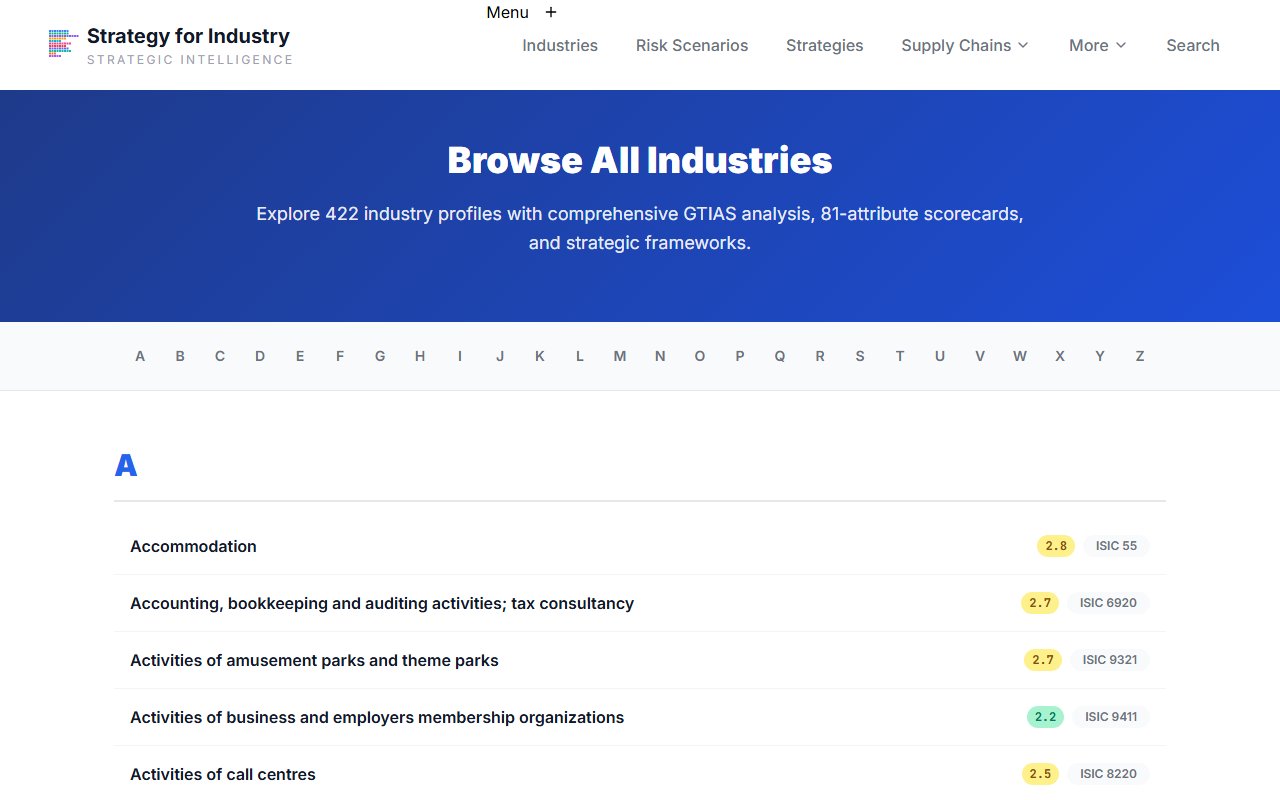
Search by industry name or ISIC code. If you're unsure of the exact classification, try a broad keyword — the search handles synonyms. Motor Vehicle Manufacturing is ISIC 2910.
Industry Hub
Read the industry overview
Open the industry hub page and read the executive summary.
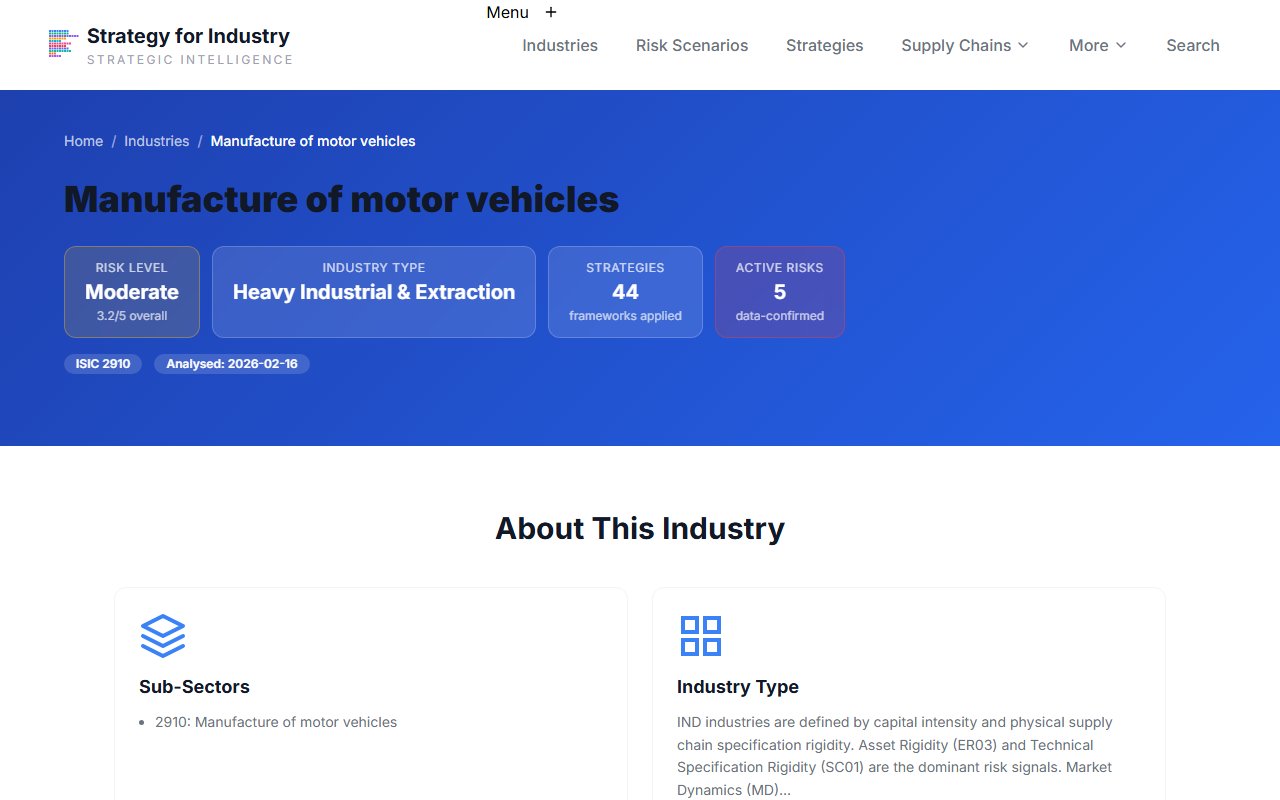
The executive summary is written for an outsider. Read it first for context, then scroll down to see which risk scenarios are currently active — these are score-triggered conditions, not generic warnings.
Industry Scorecard
Review the 83-attribute scorecard
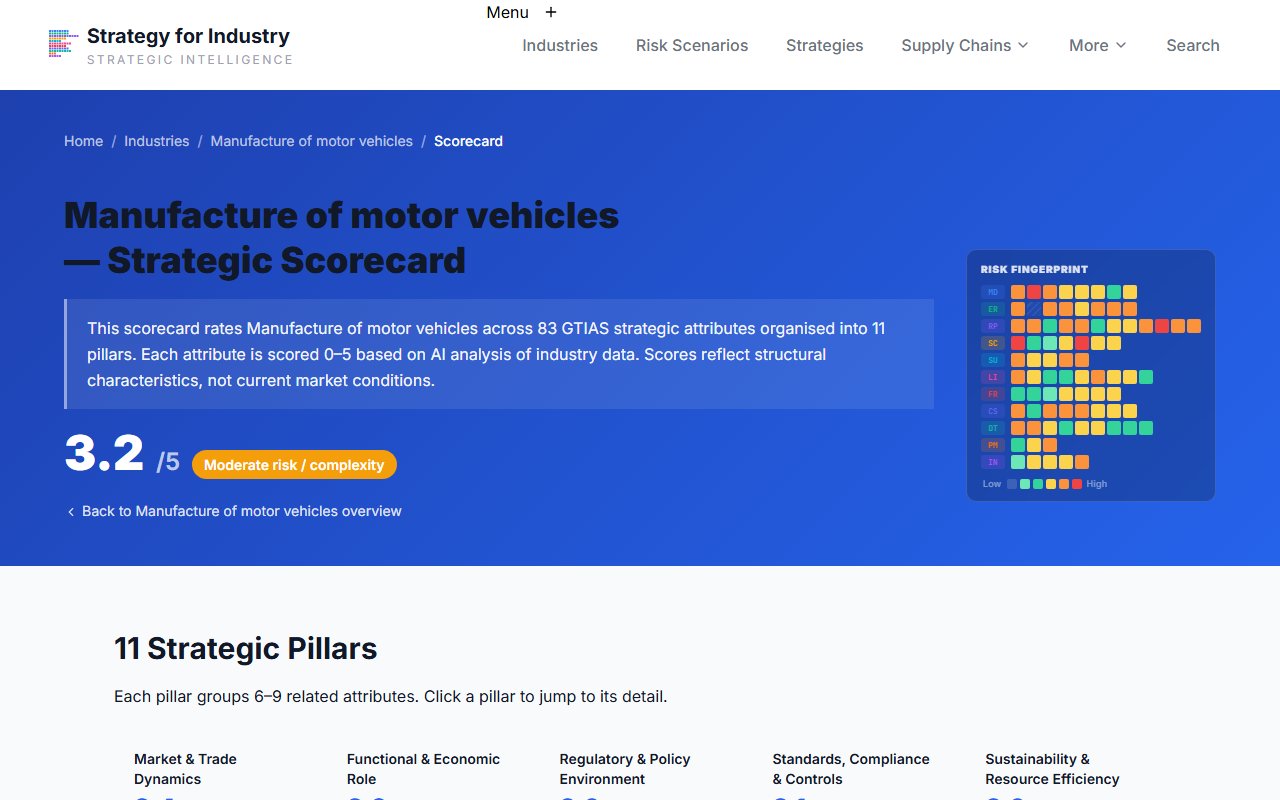
Open the Scorecard to see how the industry scores across all 11 strategic pillars.
Pay attention to Market Dynamics (MD) for competitive intensity and Financial Risk (FR) for capital requirements. As a new entrant, high scores in these pillars signal high barriers.
Strategies Overview
See the strategy frameworks pre-applied
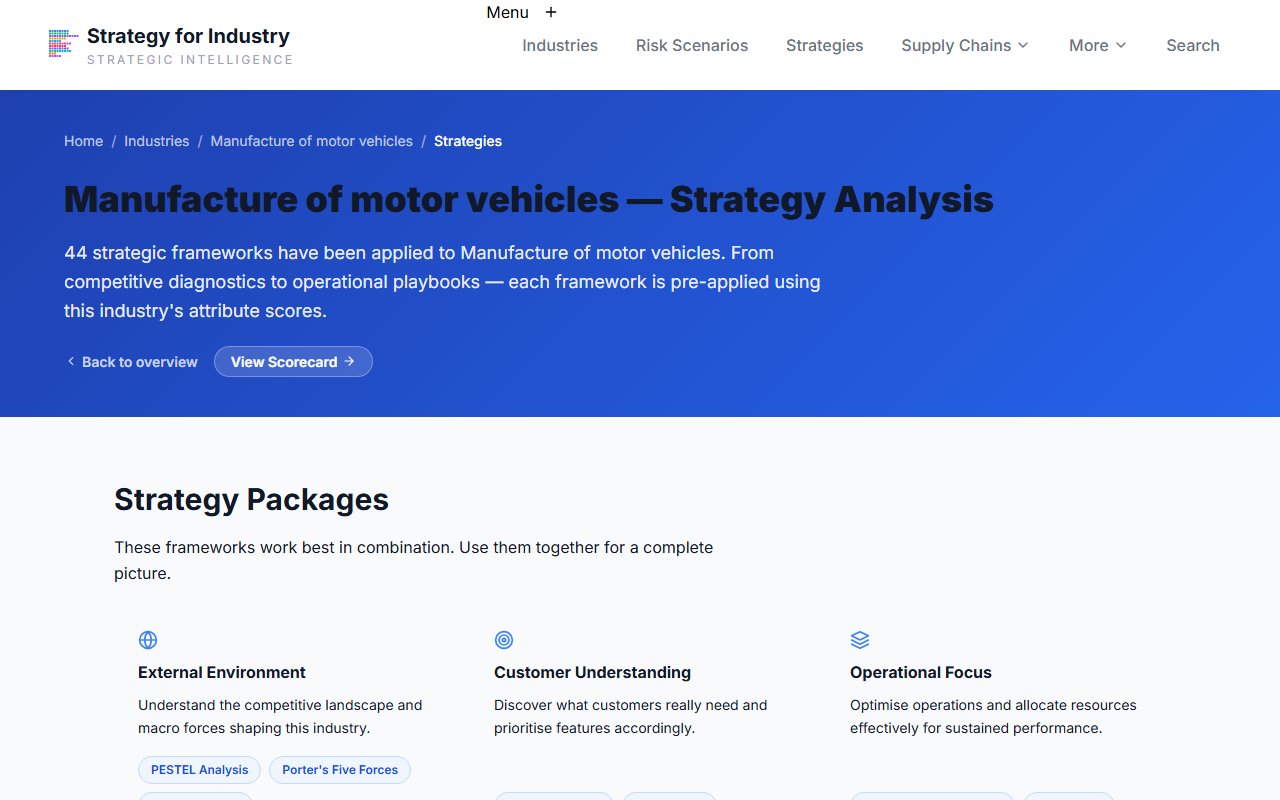
Open the Strategies overview to see which frameworks have been applied to this industry.
Click through to Porter's 5 Forces — it explicitly scores and describes the threat of new entrants. This is the most important framework for your context.
Porter's 5 Forces
Read the Porter's 5 Forces analysis
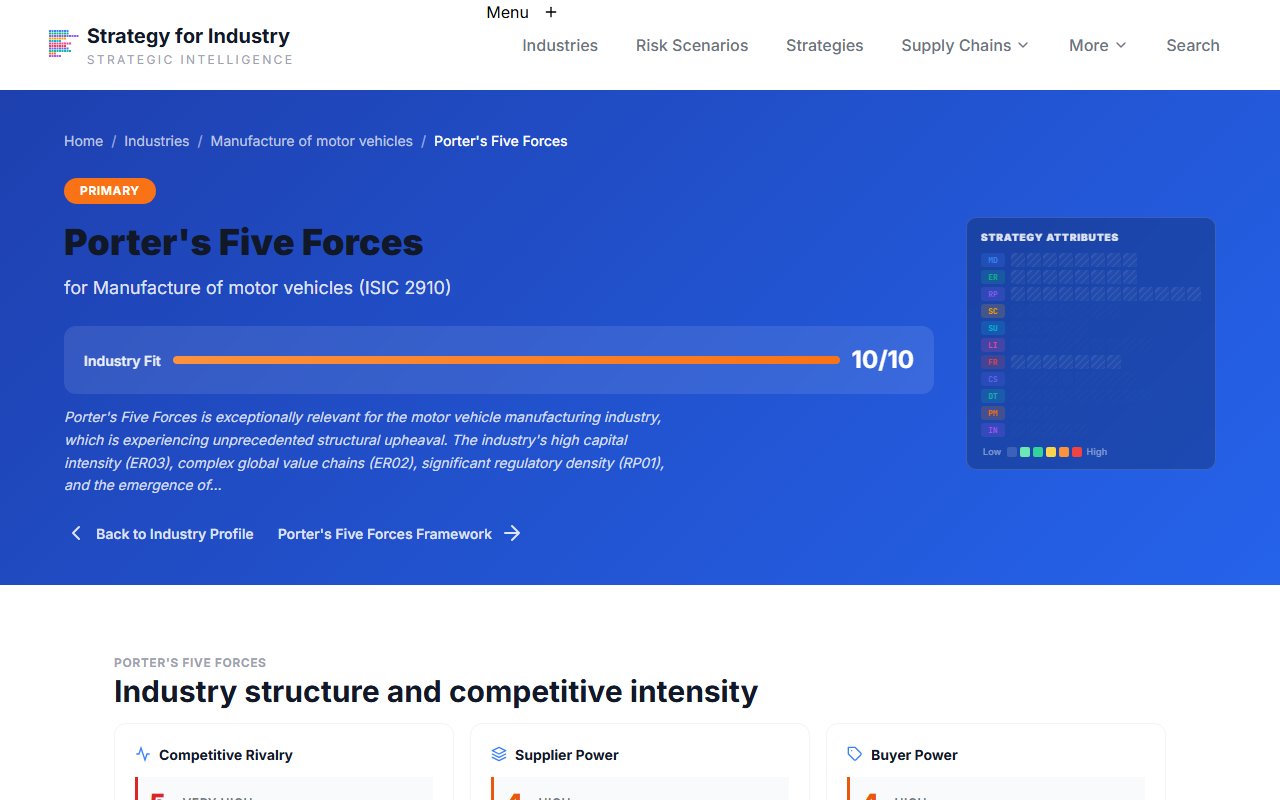
Open the Porter's 5 Forces strategy page for a pre-built competitive analysis.
The 'Threat of New Entry' force is your most relevant section. It covers capital requirements, economies of scale, and regulatory barriers — all scored 1–5 with explanations.
After this journey
You can walk into your first sales call knowing the structural competitive forces, 2–3 confirmed risk conditions, and the exact barriers a new entrant faces — backed by a scoring framework, not just intuition.
Journey 2
Find adjacent industries where your product might also work
Identify structurally similar industries that face the same problems your product solves, so you can prioritise your go-to-market expansion.
Industry Hub
Go to your primary industry page
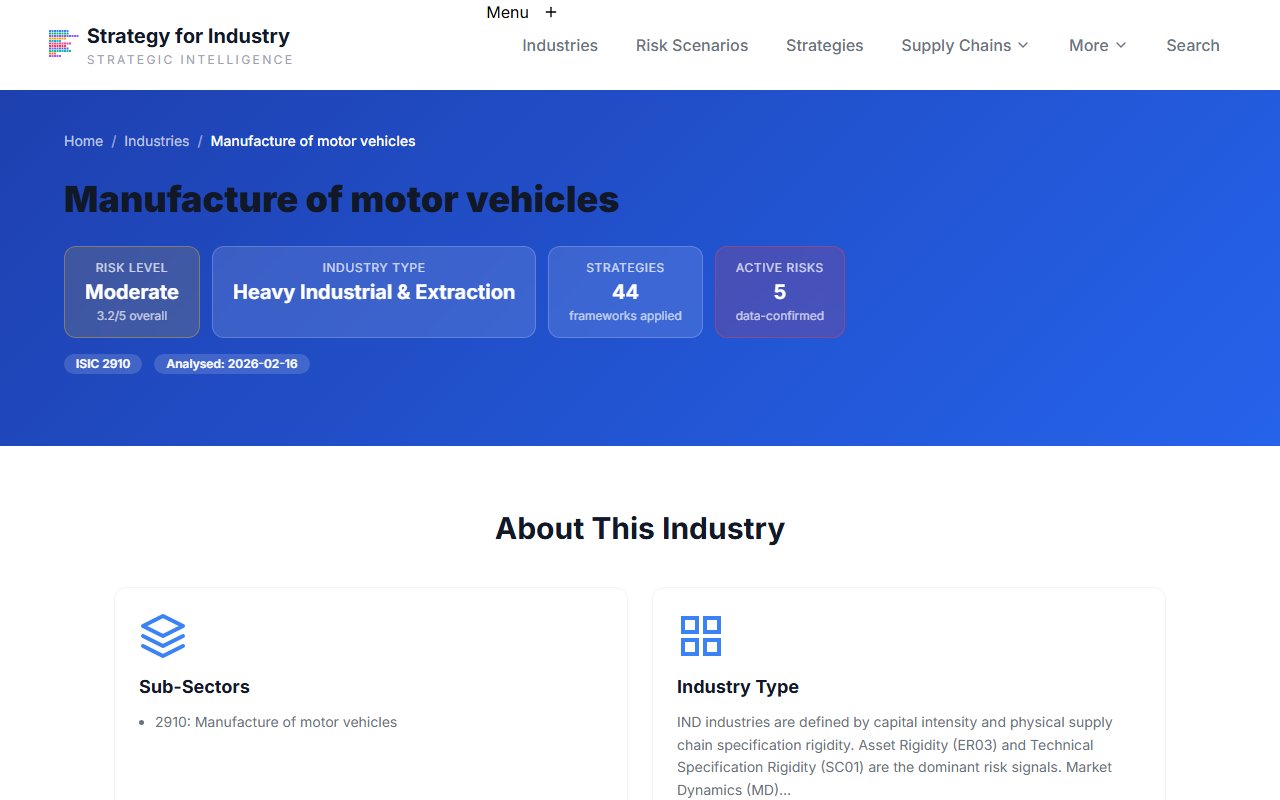
Open the Motor Vehicle Manufacturing industry hub.
Scroll down to the 'Similar Industries' section. This lists industries ranked by attribute fingerprint similarity — they share structural characteristics, not just surface-level category labels.
Compare Tool
Pick an adjacent industry to compare
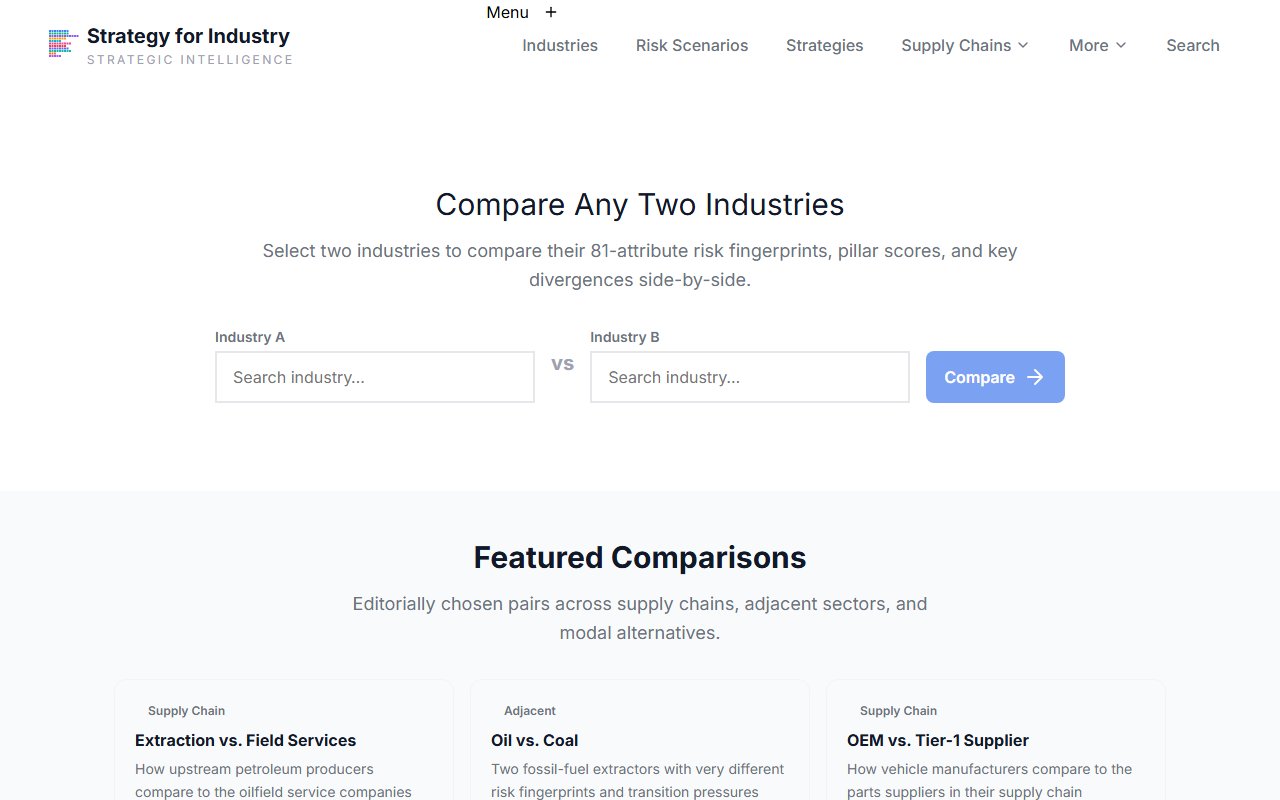
Open the Compare tool and select Motor Vehicle Manufacturing vs. an adjacent industry.
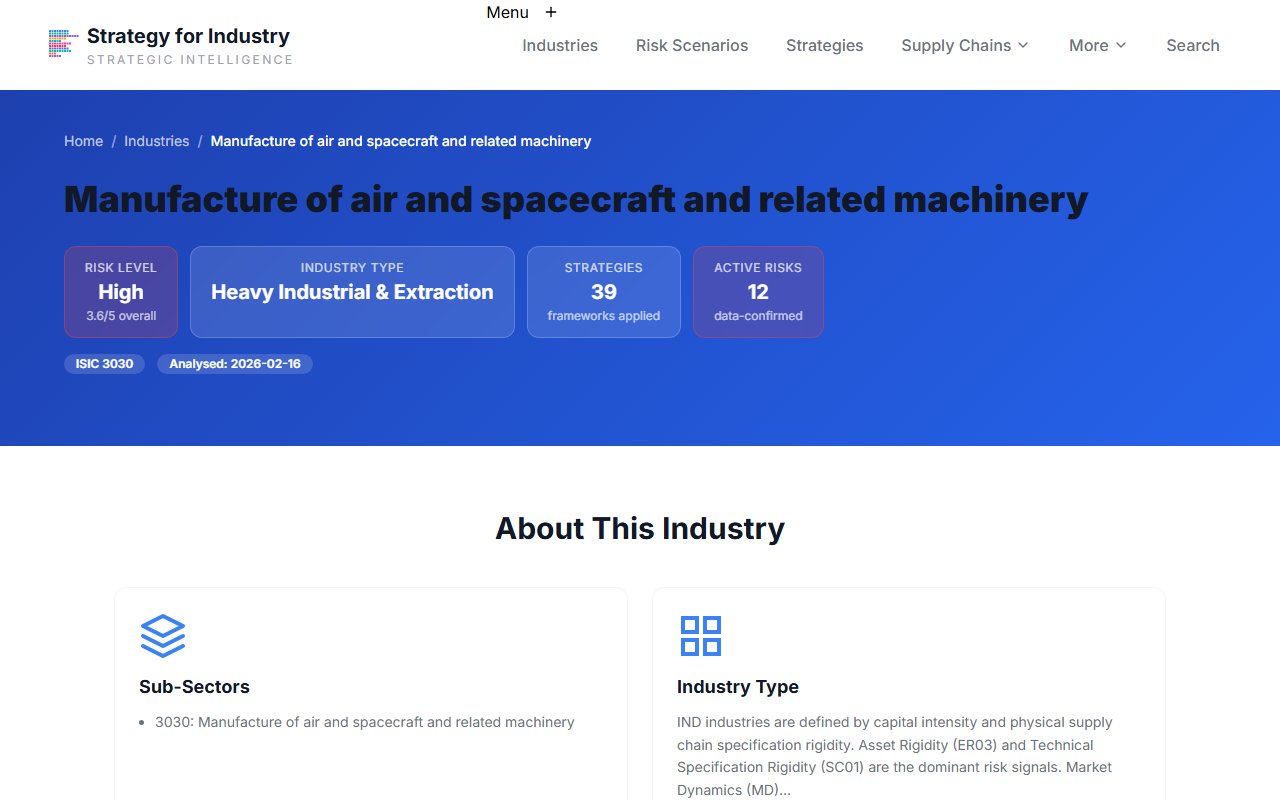
Try Motor Vehicle Manufacturing (2910) vs. Manufacture of Air and Spacecraft (3030). Both are large-scale, capital-intensive manufacturers with complex supply chains — your product logic may transfer directly.
Compare Results
Read the attribute divergence
Review which attributes score similarly and which diverge significantly between the two industries.
Focus on Supply Chain (SC) and Digital Maturity (DT) attributes. Where both industries score low on DT, there's unmet demand for digital tooling — that's your TAM expansion signal.
Adjacent Industry Hub
Check confirmed risks in the adjacent industry
Open the adjacent industry's hub page and scroll to 'Confirmed Active Risks'.
If the same risk conditions are confirmed in both your primary and adjacent industry, your product likely addresses a systemic need — not a niche one. That's your expansion argument.
After this journey
You have a ranked shortlist of 2–3 adjacent industries where your product addresses the same structural problems — each backed by attribute-level evidence, ready for a TAM slide in your pitch deck.
Journey 3 — Explore next
Identify the risk conditions most likely to affect new entrants
Use the matched risk scenarios for your target industry to identify which financial, operational, or competitive conditions are currently triggered — and what the tactical playbook response looks like. Start on the industry hub page and scroll to 'Confirmed Active Risks', then click through to any matched scenario for business impact analysis and mitigation steps.
Go to Motor Vehicle ManufacturingReady to explore?
Start with the working example for this guide — or search for any industry.