Strategist / Manager Guide
I need structured analysis and benchmarks to justify a major strategic decision.
You've worked in your industry for years and know it well — but you need structured data, cross-industry benchmarks, and ready-made frameworks to justify the next strategic move to your leadership team.
Working example
Manufacture of Basic Iron and Steel ISIC 2410
Your steel manufacturing company is evaluating a major digital transformation investment. The board wants a structured risk assessment and competitive benchmarking before approving the budget.
Journey 1
Build an executive briefing on your industry's current risk position
Produce a structured risk briefing with confirmed active conditions, business impact analysis, and tactical mitigation steps — ready for an executive presentation.
Industry Hub
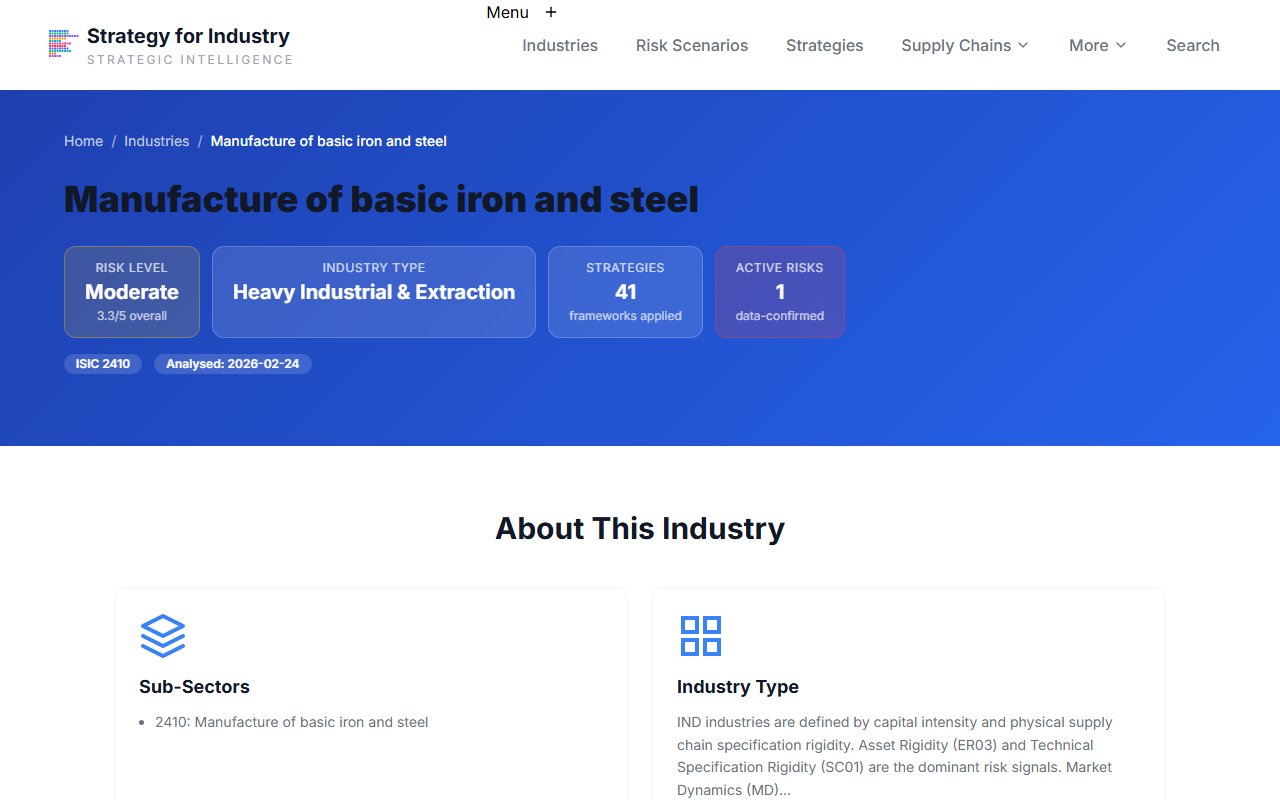
Open your industry and see confirmed active risks
Find your industry and scroll to the 'Confirmed Active Risks' section.
These are not generic risks — they're score-triggered conditions based on the industry's 83-attribute profile. Each one links to a specific scenario with business impact and mitigation steps.
Industry Scorecard
Review the attribute scorecard
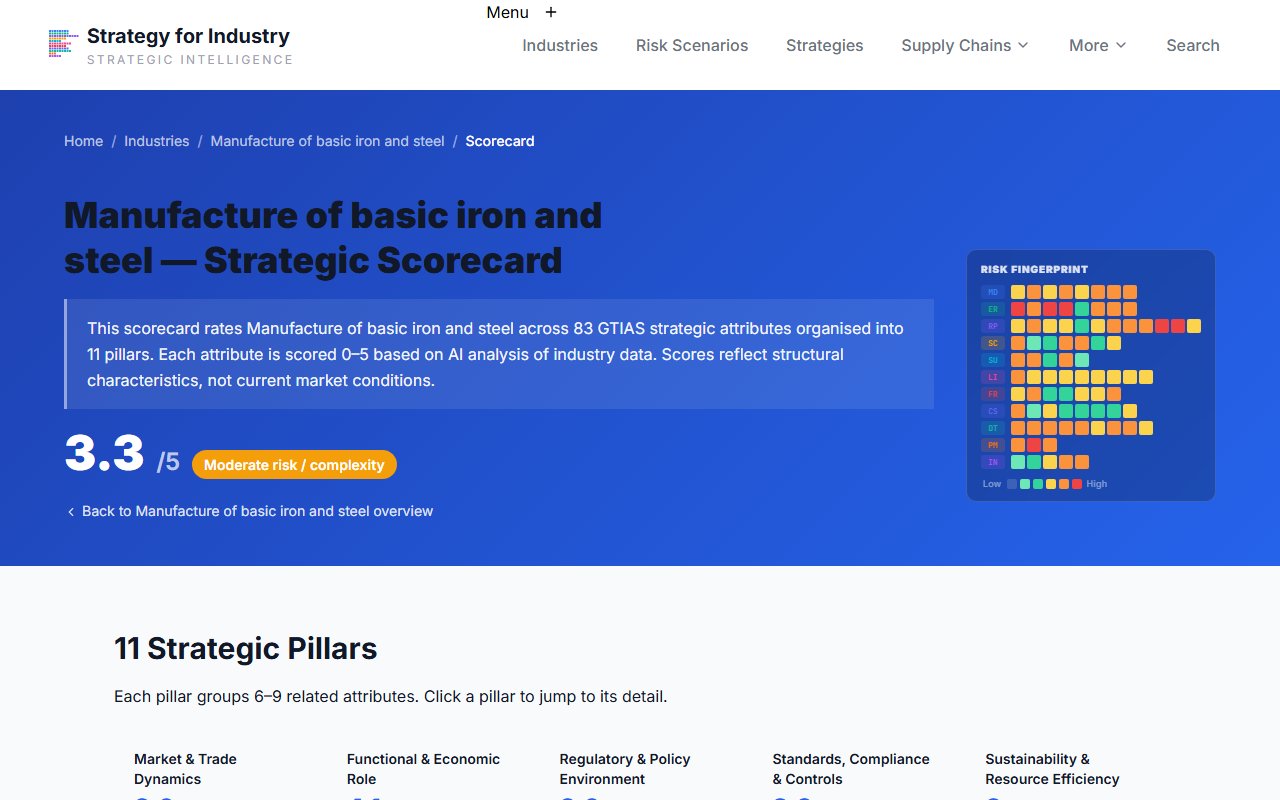
Open the Scorecard page to see which attributes are driving the confirmed risks.
Attributes scoring 4–5 are high-intensity — these are the inputs to your confirmed risk conditions. The scorecard is organised by pillar so you can quickly identify where pressure is concentrated.
Matched Scenario
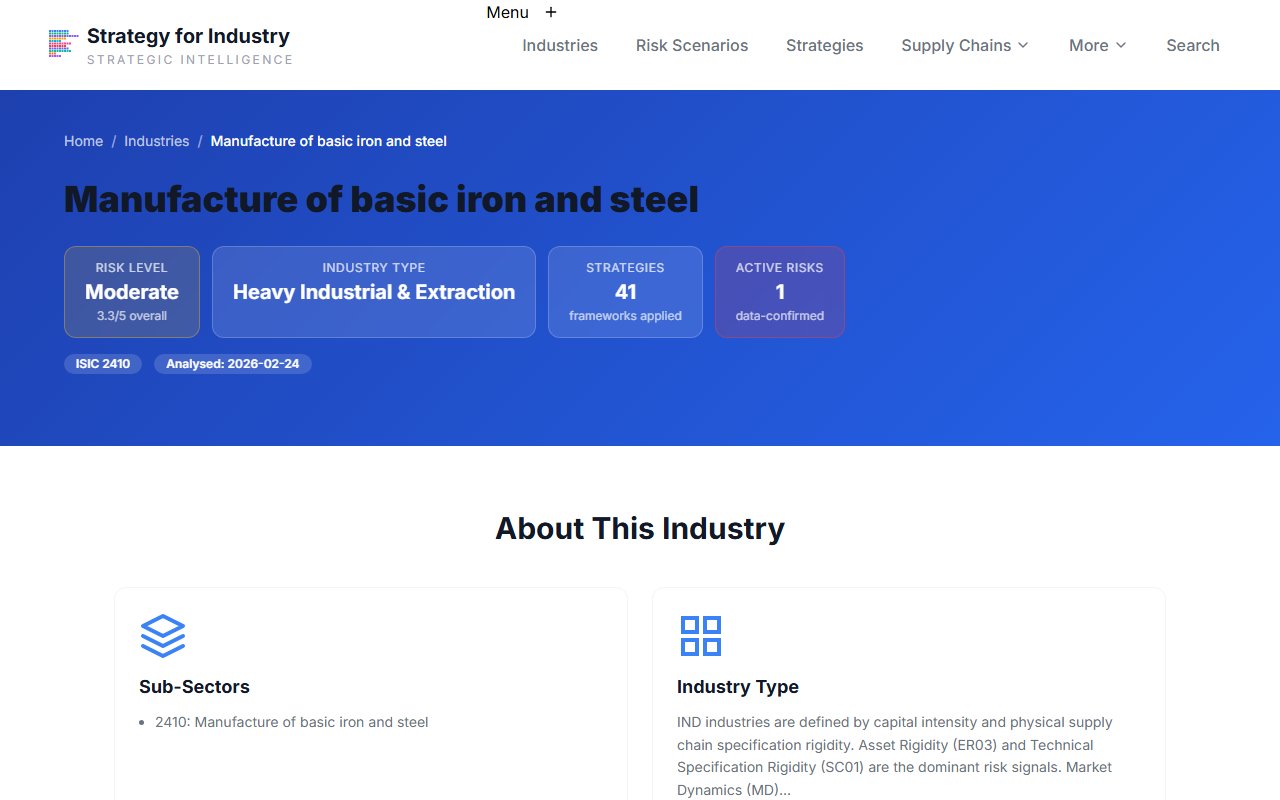
Open a matched scenario for full risk detail
Click through to a matched scenario page for detailed trigger conditions and business impact.
Each matched scenario shows: exact trigger conditions, business impact narrative, cascade risks (what fires next if unmitigated), and the mitigation hint. This is the core of your executive briefing.
Tactical Playbook
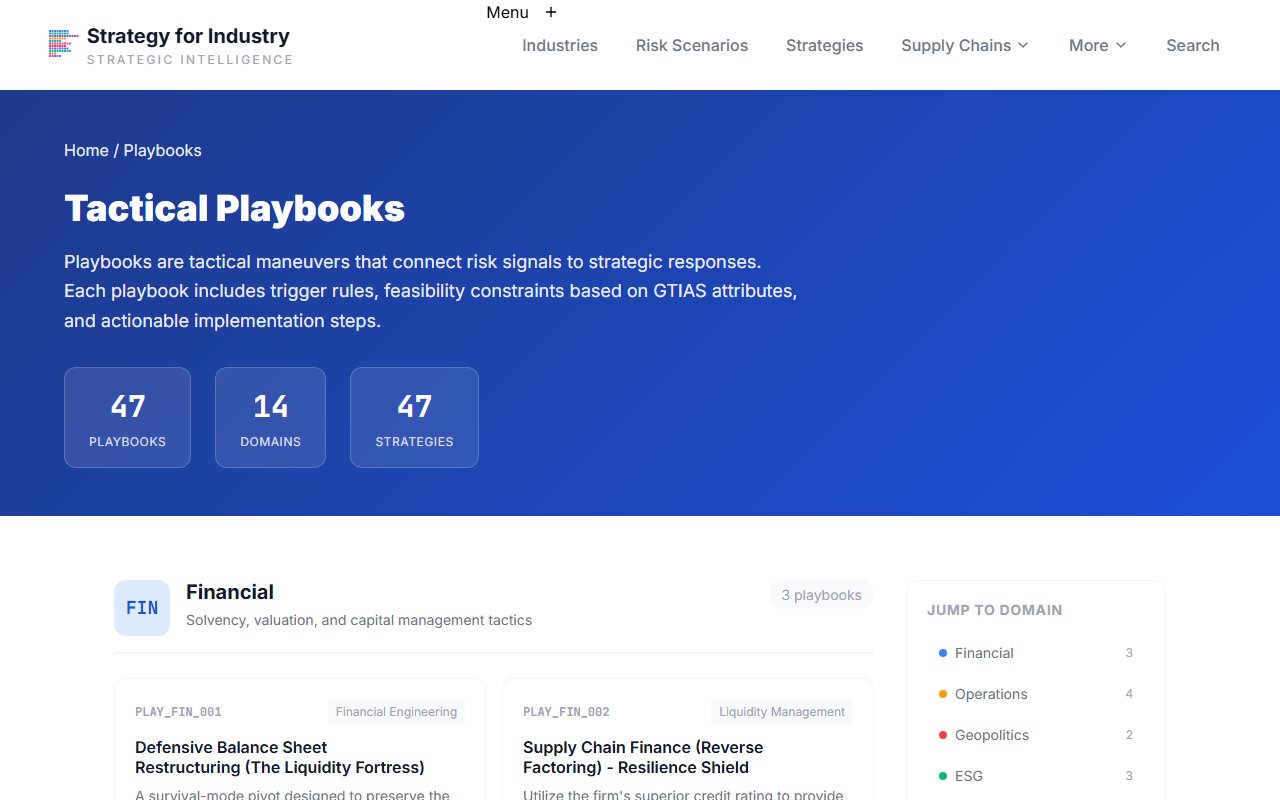
Access the tactical playbook
From the scenario page, follow the link to the relevant tactical playbook.
Playbooks contain specific action steps linked to each risk domain. For an executive presentation, use the action steps as 'recommended responses' — each one is concrete, not generic.
After this journey
You have a complete executive briefing structure: confirmed risk conditions with trigger evidence, business impact analysis, cascade risk chains, and tactical response recommendations — all sourced from a consistent scoring framework.
Journey 2
Benchmark against an adjacent digitally advanced industry
Use a side-by-side comparison to show the board exactly where the digital gap lies and what attributes are driving it.
Compare Tool
Open the Compare tool
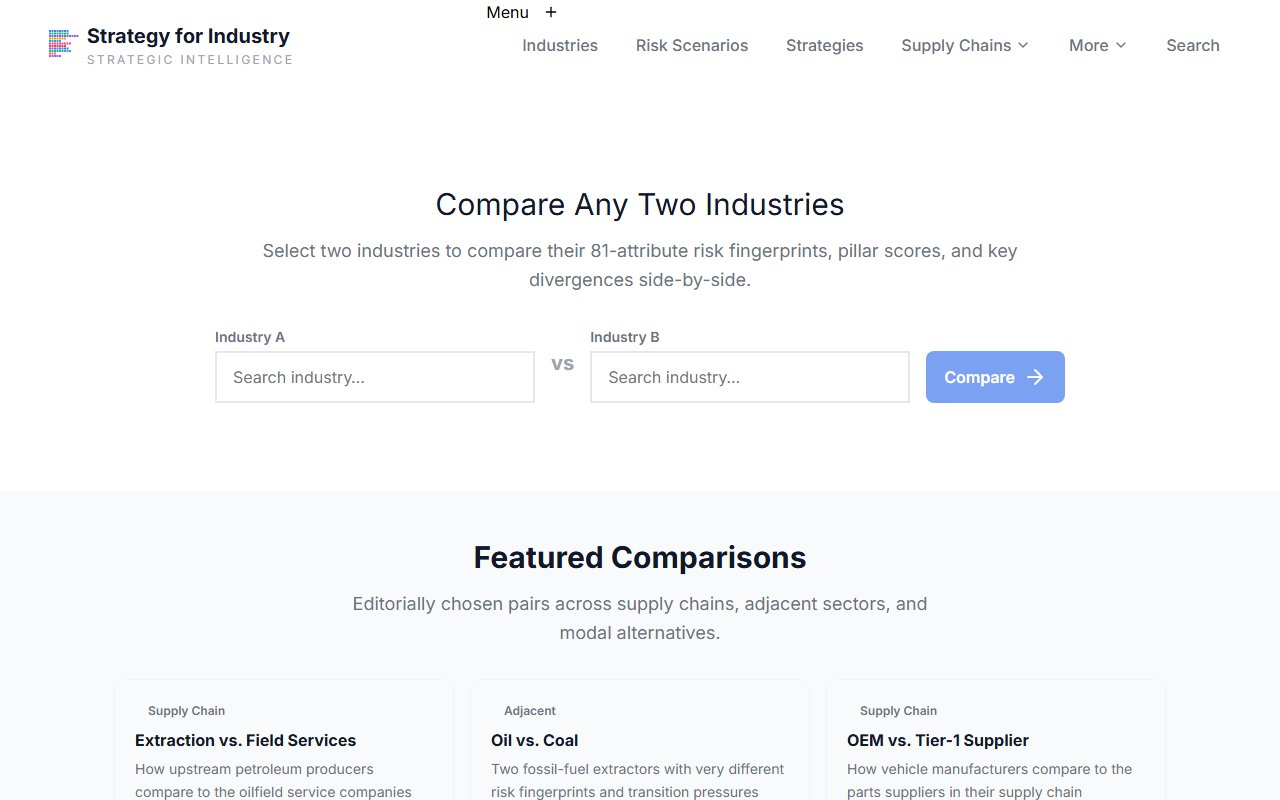
Go to the Compare tool and select your industry and a digitally advanced comparator.
Select 'Manufacture of Basic Iron and Steel' (2410) as Industry A. For Industry B, try 'Computer Programming Activities' (6201) — a DIG-archetype industry at the opposite end of the digital maturity spectrum.
Compare Results
Review the digital maturity gap
On the results page, focus on the Digital Transformation (DT) and Innovation (IN) pillar attributes.
The score difference on DT01 (Digital Infrastructure) and DT04 (Data Analytics) will be the most striking — these are the foundation attributes of any digital transformation, and the gap justifies your investment.
IND Archetype
Check archetype baselines for context
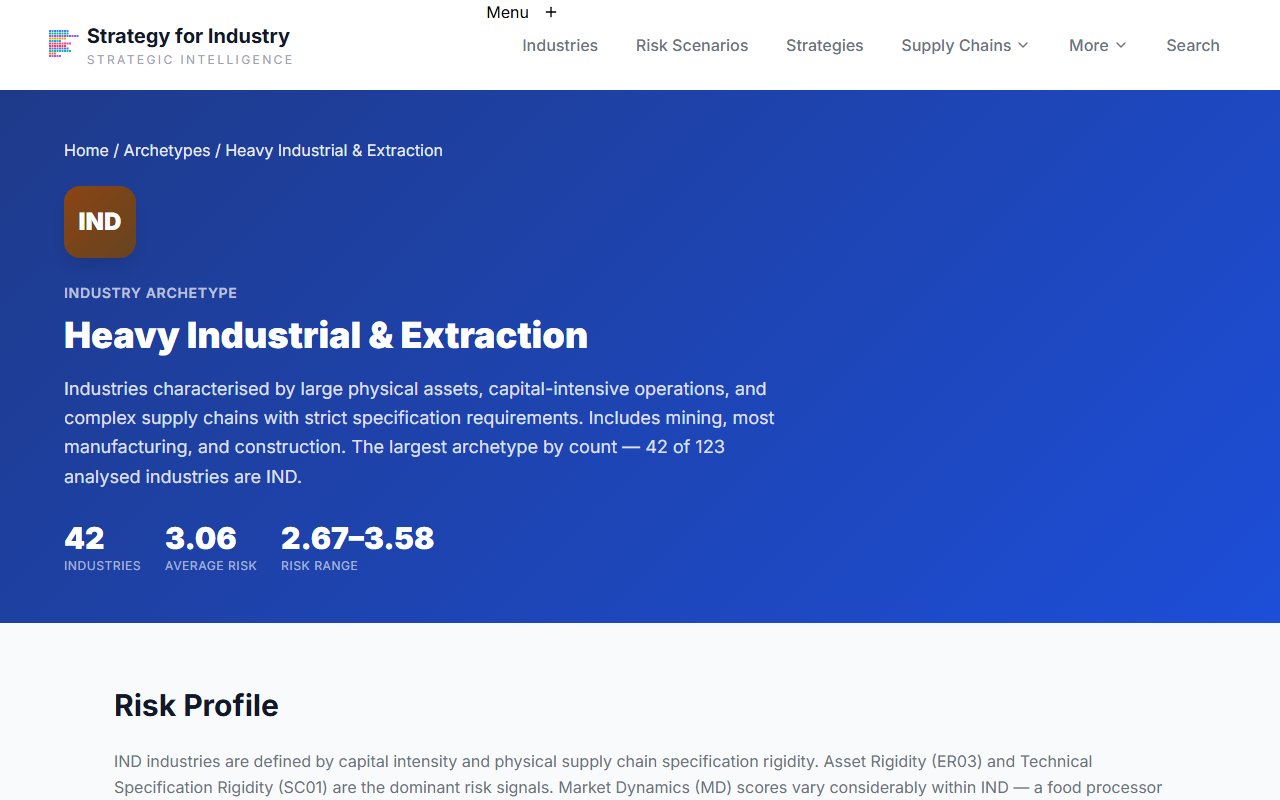
Open the IND archetype page to see whether the digital gap is industry-specific or archetype-wide.
If the IND archetype baseline for DT is low across the board, your transformation investment would move you ahead of your structural peer group — not just catch up to a dissimilar comparator. That's the differentiation argument.
Industry Strategies
Read the industry's strategy analysis
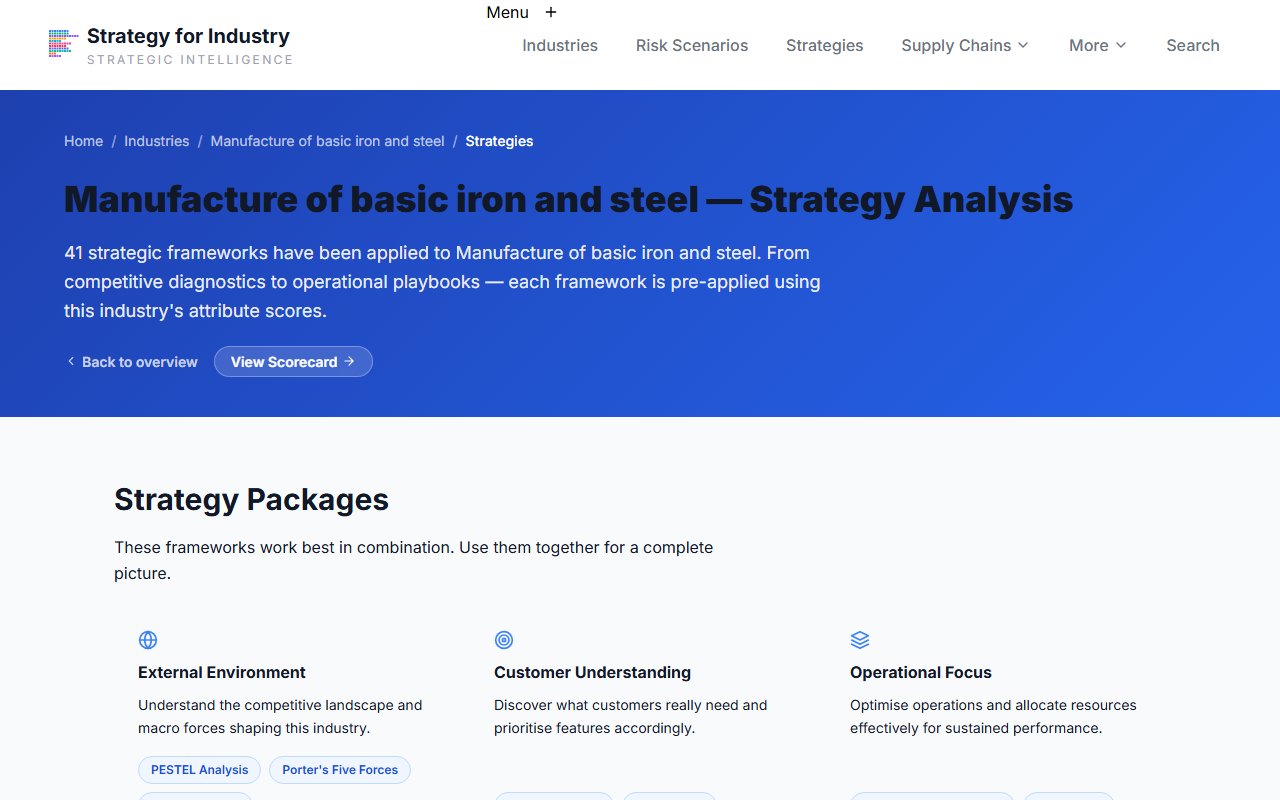
Open the Strategies overview and navigate to the SWOT or Blue Ocean strategy for your industry.
The pre-applied strategy analysis identifies specific digital attributes where transformation investment generates the most strategic leverage — use this to scope and justify the investment proposal to your board.
After this journey
You have a data-backed investment case: attribute-level evidence of the digital gap, archetype benchmark context showing where transformation creates peer-group differentiation, and a pre-built strategy analysis scoping the highest-leverage interventions.
Journey 3 — Explore next
Explore macro trends amplifying your industry's current risk conditions
Go to Macro Trends and review which global forces — ESG mandates, reshoring, critical mineral supply risks, digital transformation — are amplifying the risk conditions already confirmed in your industry. The trend-to-industry linkages are pre-mapped, so you can see directional impact (headwind or tailwind) and pressure type without manual research.
Browse macro trendsReady to explore?
Start with the working example for this guide — or search for any industry.